
How Cold Showers Made Me Stop Sweating: The Unexpected Cross-Tolerance Discovery
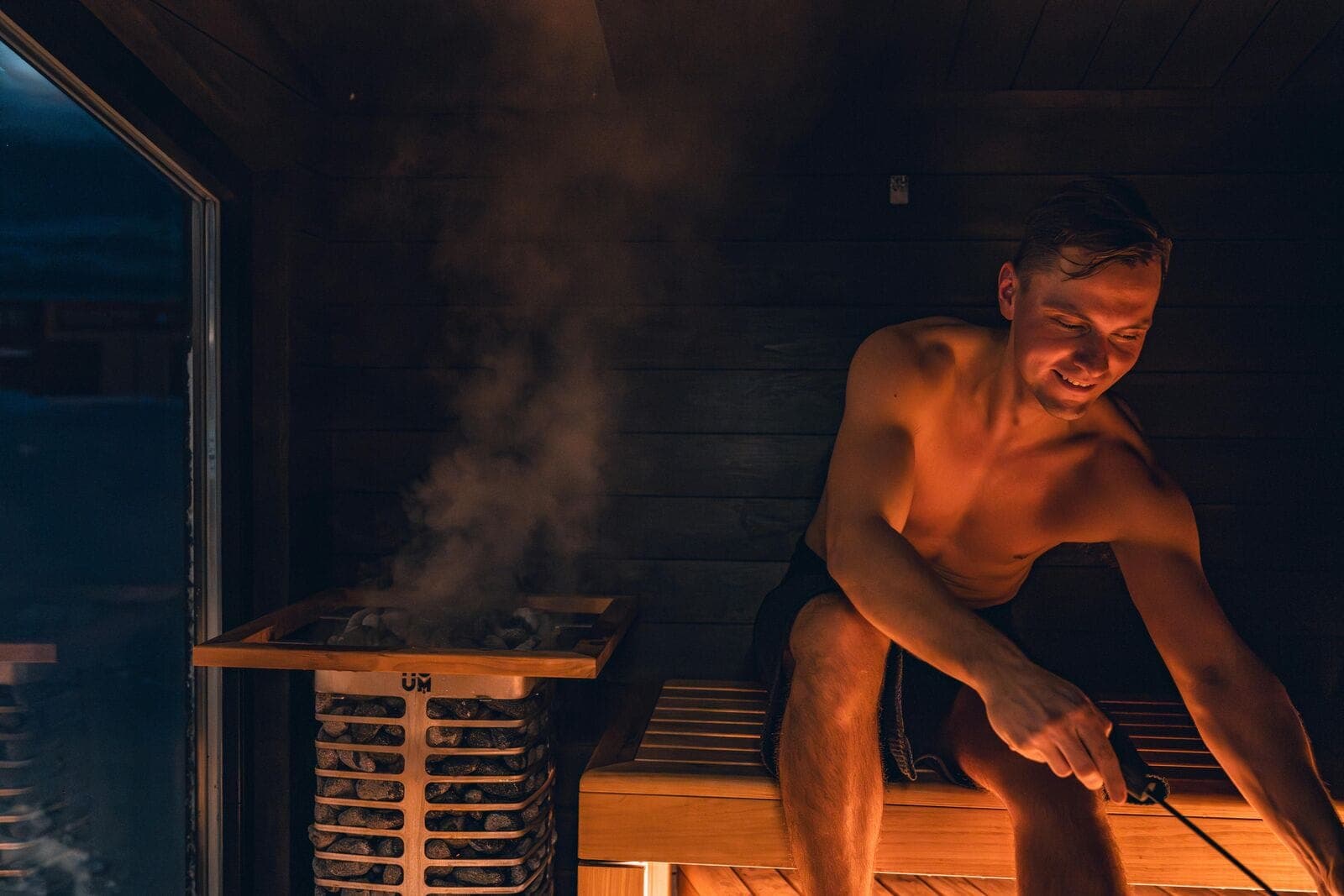
I bought a sauna blanket expecting to become a puddle of human sweat.
You've seen those videos—someone zipped into what looks like a sleeping bag from hell, face beet-red, towel soaked through, looking like they just finished a marathon in a greenhouse. That's what I thought I was signing up for.
I even bought special towels. Multiple towels. Because I was certain I'd be washing this thing every other day.
Then something weird happened.
The Session That Changed My Mind
It was a Tuesday afternoon. I'd just finished a full CryoForge session: tea, ice shower, movement, walk—the whole routine. My body felt calm, regulated, grounded. The kind of steady state that comes after you've voluntarily stressed yourself in a controlled way.
I decided to test the sauna blanket.
First session, I played it safe. Lower setting. Got warm, felt nice, nothing dramatic. But I was curious—what would happen at the highest temperature? This thing goes up to 185°F. That's hot. That's the temperature where most people look like they're melting.
So I cranked it to level 6.
Twenty minutes later, I unzipped the blanket and looked down.
Barely any sweat. Maybe a light sheen on my forehead. My heart rate? Steady. My breathing? Calm. No panic. No stress response. Just...warmth. I could feel the heat, obviously. But my body wasn't freaking out about it.
I sat there confused for a minute. Did I buy a broken sauna blanket?
The Pattern I Didn't Notice
Then I started connecting dots I hadn't paid attention to before.
My family had been complaining about the heat for months. "It's so hot in here," they'd say, cranking the AC. I'd be sitting there in the same room, perfectly comfortable, wondering what they were talking about. I'd only notice the temperature when they pointed it out.
Earlier that year, I'd done a session in an infrared sauna—around 130°F if I remember right. I expected to tap out early. Instead, I sat there for 30 minutes feeling calm and present. No rivers of sweat. No desperate need to escape. Just heat, doing its thing, while my body stayed composed.
I'd written it off as a fluke. Maybe the sauna wasn't hot enough. Maybe I just had a good day.
But after the sauna blanket experience, I couldn't ignore it anymore.
Cold exposure had changed how my body handled heat.
The Science Behind the Surprise
Here's what I learned after digging into this:
Your body doesn't have separate systems for "cold stress" and "heat stress." It has one integrated stress-regulation system, run by your autonomic nervous system. When you train that system to handle one type of environmental stressor, you're training the whole system.
This is called cross-adaptation or cross-tolerance—a well-documented phenomenon in physiology research.
Think of it like this: your nervous system is learning to regulate under pressure. It's getting better at reading environmental signals, adjusting blood flow, managing core temperature, and staying calm when conditions change. Whether the stressor is cold water or hot air doesn't matter—the skill your body is building is the same.
When you do cold exposure regularly (like in CryoForge), you're teaching your body:
- How to stay calm when uncomfortable
- How to regulate temperature efficiently
- How to respond to stress without panic
- How to recover quickly after stress ends
Those skills don't vanish when you switch from cold to heat. They transfer.
There's also a metabolic angle. Cold exposure activates brown adipose tissue (BAT)—the "good" fat that generates heat. Research shows that people with active BAT tolerate cold better without shivering and maintain more stable core temperatures. When BAT gets activated regularly through cold exposure, it becomes more efficient at thermoregulation in general. Your body gets better at producing and dissipating heat as needed.
And here's the kicker: the cardiovascular adaptations you get from cold exposure—improved circulation, better vascular tone, enhanced blood flow—also help you handle heat. Your body becomes more efficient at moving heat away from your core when needed.
What This Means in Practice
After months of CryoForge, my body's relationship with temperature had fundamentally changed.
I don't mean I became some superhuman who can sit in a sauna for hours or take ice baths without blinking. I mean my nervous system stopped panicking about temperature changes. It stopped treating every degree shift like an emergency.
When I got into that 185°F sauna blanket, my body basically said: "Oh, we're doing temperature regulation again? Cool. I know this."
No alarm bells. No fight-or-flight response. Just smooth, efficient adaptation.
The same thing happened in reverse. On hot days, I'd notice my family sweating while I felt fine. Not because I was tougher—but because my body had learned to regulate heat stress without spiraling.
The Real Lesson: Stress Is Stress
Here's what I think is actually happening:
We tend to categorize stressors as separate things. Cold stress. Heat stress. Exercise stress. Mental stress. But your nervous system sees them all as variations of the same challenge: maintain stability when conditions change.
When you practice handling one type of stress in a controlled, intentional way, you're building a general-purpose resilience system. This is the core principle of hormetic stress—small doses of stress that make you stronger. You're teaching your body that temporary discomfort isn't a threat—it's just information.
Cold exposure became my entry point because it's simple, accessible, and impossible to ignore. But the skill I was building wasn't "being good at cold." It was staying regulated under pressure.
That skill shows up everywhere:
- In the sauna blanket, staying calm at 185°F
- On summer days, not noticing heat until someone mentions it
- During stressful meetings, keeping my heart rate steady
- When things go wrong, responding instead of reacting
Why I'm Still Surprised
I've been doing CryoForge for months. I understand the theory. I've read the studies about cross-tolerance and hormetic stress.
And yet, every time I experience it firsthand, I'm still a little surprised.
Because knowing something intellectually is different from feeling it work in your body.
When I unzipped that sauna blanket and realized I wasn't a melting puddle of sweat—when I sat there calm and dry and confused—that's when the theory became real.
The Practical Takeaway
If you're doing cold exposure for the cold exposure itself, you're missing half the picture.
You're not just building cold tolerance. You're building stress tolerance. You're training your nervous system to stay calm, regulated, and efficient when conditions get uncomfortable.
And that training transfers.
Heat doesn't freak you out as much. Temperature swings don't throw you off. Your body learns that discomfort is temporary and manageable.
It's not magic. It's just your nervous system getting really, really good at its job.
What About You?
If you've been doing cold exposure (or any kind of hormetic stress practice), pay attention to how your body handles other stressors.
Do you notice heat differently? Do you sweat less in situations that used to drench you? Do you stay calmer when things get uncomfortable?
Your body might already be adapting in ways you haven't noticed yet.
For me, it showed up in a sauna blanket I thought I'd have to clean every other day. Turns out, I barely needed those extra towels after all.
Further Reading
If you want to dive deeper into the science behind cross-tolerance and cold adaptation, here are some key research papers:
Cross-Adaptation & Cross-Tolerance:
- Cross-Adaptation: Heat and Cold Adaptation to Improve Physiological and Cellular Responses to Hypoxia - Sports Medicine, 2017
- Recent updates on cold adaptation in population and laboratory studies, including cross-adaptation with nonthermal factors - Journal of Physiological Anthropology, 2025
Brown Adipose Tissue & Thermoregulation:
- Brown Adipose Tissue Is Linked to a Distinct Thermoregulatory Response to Mild Cold in People - Frontiers in Physiology, 2016
- Brown fat thermogenesis and cold adaptation in humans - Journal of Physiological Anthropology, 2025
Cardiovascular Effects of Cold Exposure:
- Health effects of voluntary exposure to cold water – a continuing subject of debate - International Journal of Circumpolar Health, 2022
- The effects of cold exposure on cardiovascular and cardiac autonomic control responses - Journal of Thermal Biology, 2024
Hormetic Stress:
- Less Can Be More: The Hormesis Theory of Stress Adaptation in the Global Biosphere - BioScience, 2021
Disclaimer: This is my personal experience and observation. I'm not a doctor, and this isn't medical advice. If you have cardiovascular conditions, heat sensitivity, or health concerns, consult a healthcare professional before doing cold or heat exposure. Everyone's body responds differently to environmental stressors—listen to yours.
Related Posts: